How to choose the right ERP without wasting money
The business case has been approved. The budget is there. Now someone has to choose the new ERP, and that someone is you. Where do you start?
That was the question behind one of our Lunch & Learn sessions, “How to Choose the Right ERP Without Wasting Money”. Here’s what we covered, along with some of the best points from the discussion.
Why this decision deserves care
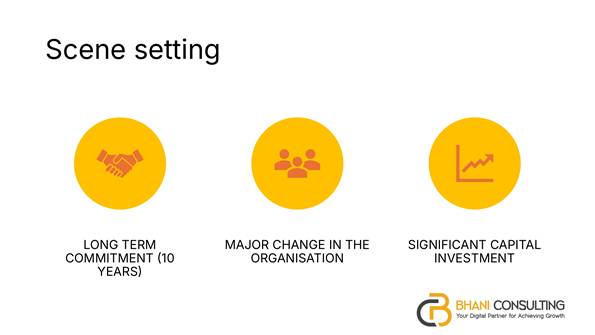
An ERP decision is a long-term commitment, a major change and a significant capital investment.
Choosing an ERP isn’t like choosing a new laptop. Three things make it different:
- It’s a long-term commitment. Once you choose a system, you’ll live with it for five to ten years, sometimes longer.
- It’s a major change. An ERP touches finance, HR, payroll, procurement, assets and more. It changes how people across the organisation do their work.
- It’s a significant investment. There’s real capital involved, and once the money is spent it doesn’t come back.
It’s also very much a one-way decision. Once you’ve signed and started implementing, turning back is painful and expensive.
That’s why I’d caution against choosing based on past experience alone. Many of us have worked with one product or another in a previous role, and it’s tempting to say “I know this one, let’s go with it”. But your new organisation isn’t your old one. Its needs, people and constraints are different.
What are we actually looking for?
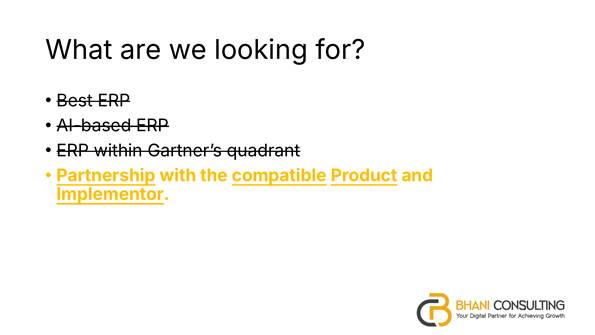
Not the best, the most AI-driven or the most famous ERP, but a partnership with a compatible product and implementer.
When people start looking, they often go after the best ERP, the one with the most AI, or one that sits in the top corner of an analyst’s quadrant. None of those is the real goal.
What you’re looking for is a partnership: a product that’s compatible with your organisation, and an implementer you can trust to deliver it with you. The best ERP in the world is the wrong ERP if it doesn’t fit how you work, what you can afford, or what your people can support.
Five steps to find a compatible partner
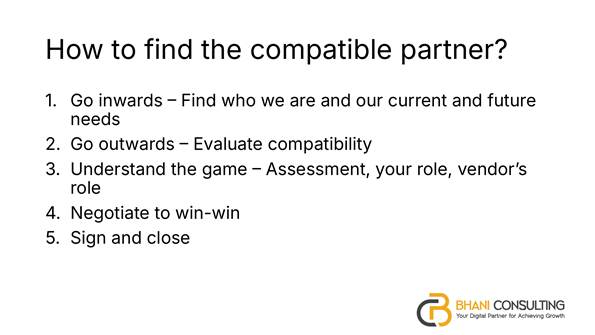
The five steps: go inwards, go outwards, understand the game, negotiate to win-win, and sign and close.
Step 1: Go inwards
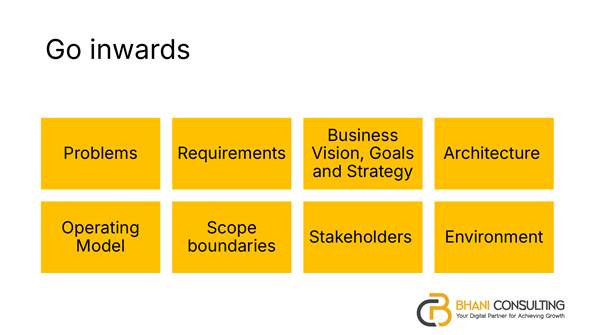
Before you look at vendors, understand your own organisation.
Before you talk to a single vendor, look at yourself. Find out who you are, and what you need now and in future. That means being clear on:
- Problems: what’s actually not working today, and why.
- Requirements: what the new system must do, should do and could do.
- Vision, goals and strategy: where the organisation is heading, and how the ERP supports that.
- Architecture: what other systems you have and how the ERP will integrate with them.
- Operating model: how you run things, and how that might change.
- Scope boundaries: what’s in and what’s out.
- Stakeholders: who’s affected and who needs a say.
- Environment: the politics, the culture and how decisions really get made.
Knowing all this puts you in control. Without it, the vendors will happily tell you what you need.
Step 2: Go outwards
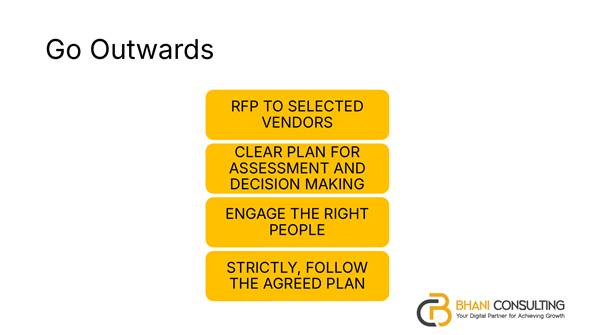
Go to market with a clear plan, and stick to it.
Once you know what you need, go to the market. Typically that’s a request for proposal, tender or quote to a selected group of perhaps five to ten vendors.
Before the responses come back, agree a clear plan for how you’ll assess them and make a decision. Set the weightings. Decide who assesses which part. If procurement is a module, your procurement manager should be assessing it, not someone who’s never raised a purchase order.
Then follow the plan. Strictly. It’s very easy to get swept up by a slick demo or a charismatic presenter. A clear process keeps everyone honest, including you.
Step 3: Understand the game
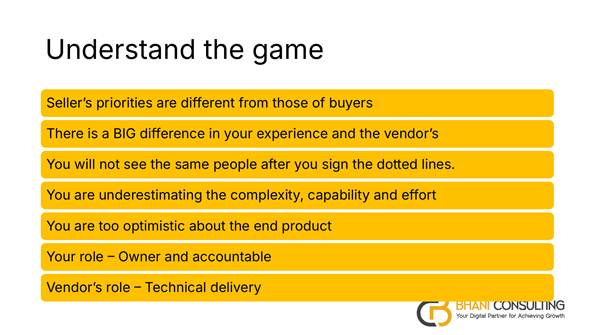
Buyers and sellers have different priorities, and different levels of experience.
Selecting an ERP is a bit of a game, and it helps to know the rules:
- The seller’s priorities aren’t yours. Vendors are there to sell, and their teams are rewarded for it. That’s not a criticism, it’s just how it works.
- They’ve done this far more often than you. A vendor may run dozens of selections a year. You might go through one every ten years.
- You won’t see the same people after you sign. The sales team moves on. The delivery team is often entirely different.
- We underestimate complexity, capability and effort. Most organisations underestimate what they’ll need on their side: project management, business analysis, change, testing, reporting, security, data migration and architecture.
- We’re too optimistic about the end product. The demo always looks better than what eventually goes live.
There’s also a quieter risk. Selection can easily become an emotional decision. People fall for a product, or a person, and the evidence takes a back seat.
Be clear about roles, too. You, the client, own the project and are accountable for it. The vendor’s role is technical delivery. Hand over ownership and you’ll be disappointed.
Step 4: Negotiate to win-win
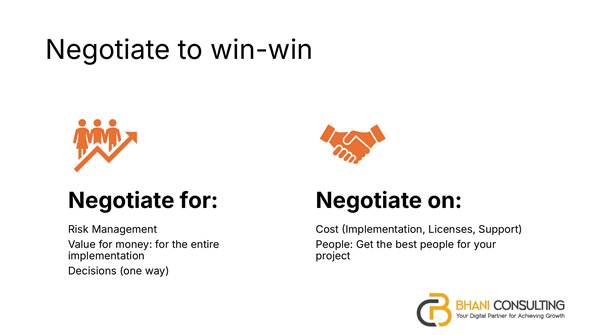
Negotiate for risk management and value for money, and on cost and people.
Negotiation isn’t about squeezing the vendor until it hurts. A deal where they lose money is a deal that’ll cost you later. Aim for win-win.
Negotiate for risk management and value for money across the whole implementation, not just the first invoice. Negotiate on cost, covering implementation, licences and ongoing support. And negotiate on people. Try to secure the best delivery team for your project, because the people who turn up make an enormous difference.
Step 5: Sign and close
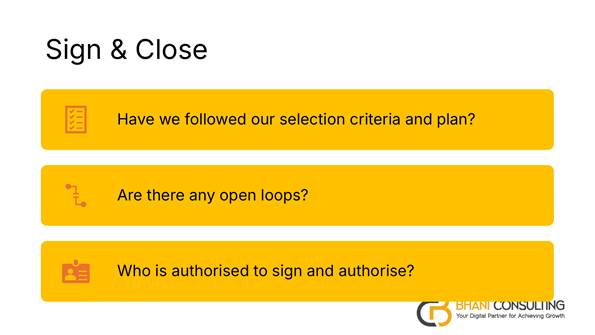
Three questions to ask before you sign.
Before you sign, pause and ask three questions:
- Have we followed our selection criteria and plan? If you’ve drifted, find out why before you commit.
- Are there any open loops? Unanswered questions and unresolved issues don’t get easier after the contract is signed.
- Who is authorised to sign? Make sure the right people sign the statement of work, the end-user agreements and the support arrangements.
From the discussion
The open discussion added some useful perspectives.
One attendee with long experience in ERP projects stressed rightsizing. A process that suits a large organisation can be overkill for a small one, so scale your approach to fit. They also found that a structured project method helps break a big selection into manageable chunks, and that talking to peers who’ve been through it recently is invaluable.
The same attendee made a point that stuck with me: cadence counts. Years can pass between signing a contract and seeing the benefits, and in that time people come and go. The ones who made the decision may not be there when it pays off, or doesn’t. That’s why it’s worth going back, after go-live, to check whether the value you bought was actually delivered.
Another attendee runs a small manufacturing business with long quote-to-delivery cycles and asked whether there were cheaper alternatives to a full ERP. My answer was not to jump to the cheapest option, or any option, straight away. Go inwards first and understand what you really need. Then use software-selection websites and AI tools to build a shortlist of around ten products, and take it from there. The same principles apply at any size.
Closing thoughts
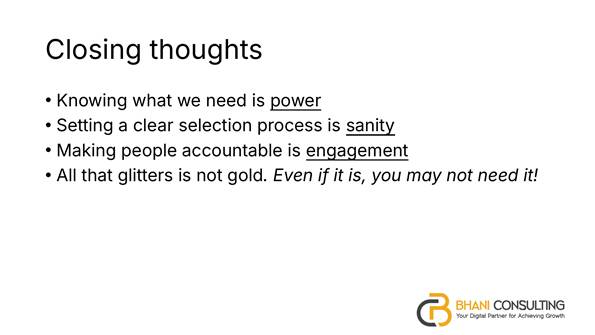
Four closing thoughts on ERP selection.
- Knowing what we need is power. It keeps you in control of the conversation.
- Setting a clear selection process is sanity. It stops the loudest voice or the slickest demo from deciding.
- Making people accountable is engagement. When people own their part of the decision, they own the outcome too.
- All that glitters is not gold. And even if it is, you may not need it.
The right ERP isn’t the best one on the market. It’s the one that fits your organisation, delivered by people you trust.